Spotlight from the Adama Exhibition: Oshrat Regev
Oshrat Regev is a multidisciplinary artist living in Mitzpe Dani. She is a graduate of the Emuna–Efrata Academic College, the owner of an art and ceramics studio, and teaches art in various settings.
Regev works from a conceptual approach in which the idea and the process are the starting point of creation. Her work emerges from a deep encounter between the artistic process, bodily and emotional experience, and observation of both the inner and social worlds.
Her work combines various media and materials—from staged photography to clay works, installation, and the use of the body itself as a working material. To her, the body is a space in which internal processes of memory, movement, and emotion are inscribed. Her works are characterized by sensitivity and a profound connection to the human condition, integrating both a personal and social perspective.
In the “Adama” exhibition, Oshrat presents two works that delve into the heart of the connection between the human body, memory, and the earth.
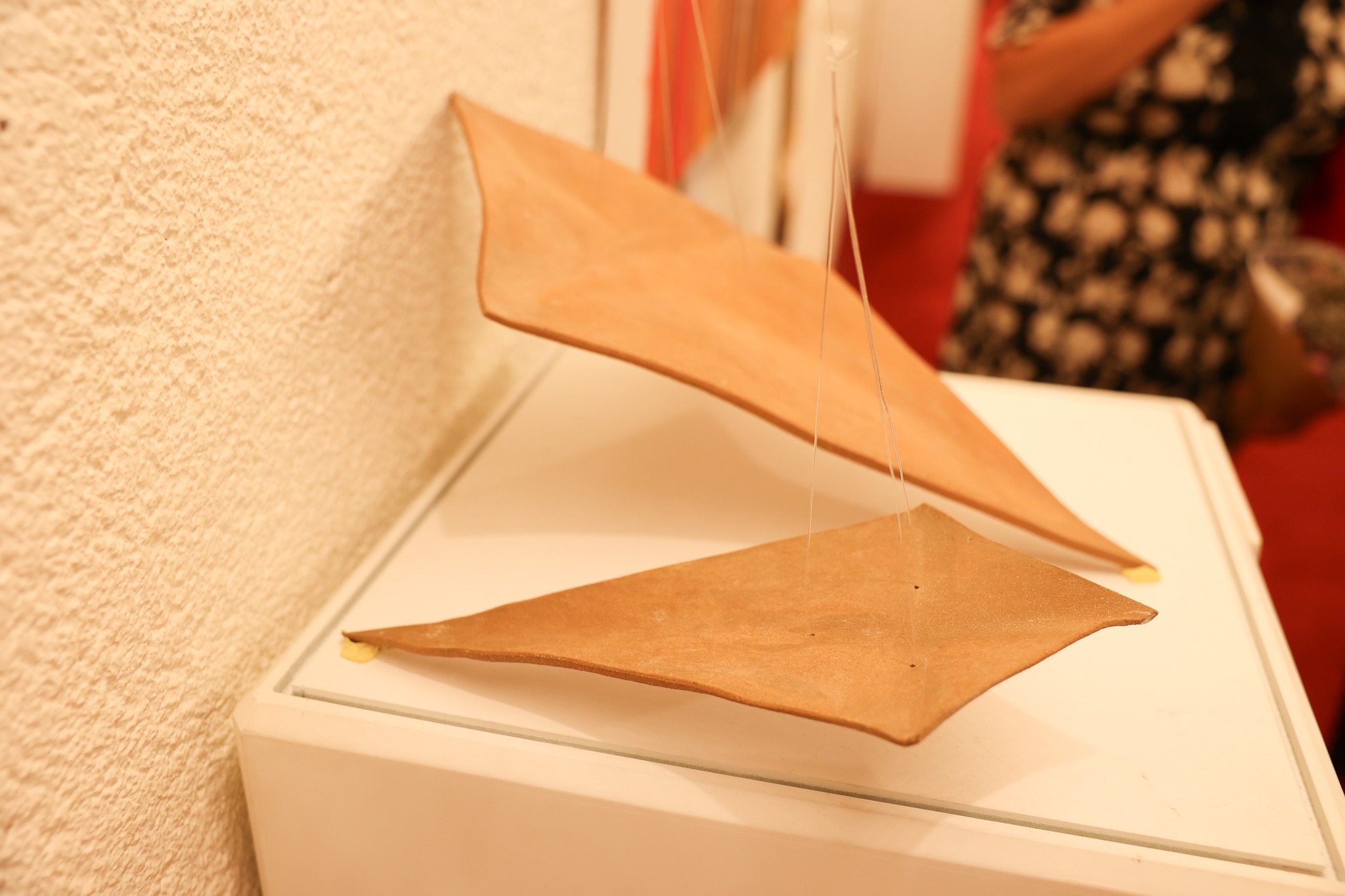
“Kites” (2005): Two items from a broader project are displayed. These are two small clay objects shaped like a rhombus, reminiscent of kites. These clay bodies hang delicately from fishing line that pulls them upward. Oshrat describes the work as exploring the inner tension that exists within every person—the tension between matter and spirit.
The kite becomes a metaphor for the human being: made of matter, of earth, yet driven by the force of spirit. It never fully detaches from the ground, yet moves only when the wind animates it.
The strings that pull upward create a constant point of connection to the inner space and to the horizon that exists both within us and in the world—the space that propels us. This is a quiet and delicate work that invites viewers to reflect on the balance within themselves, between holding and letting go, between heaviness and movement, between body and soul.
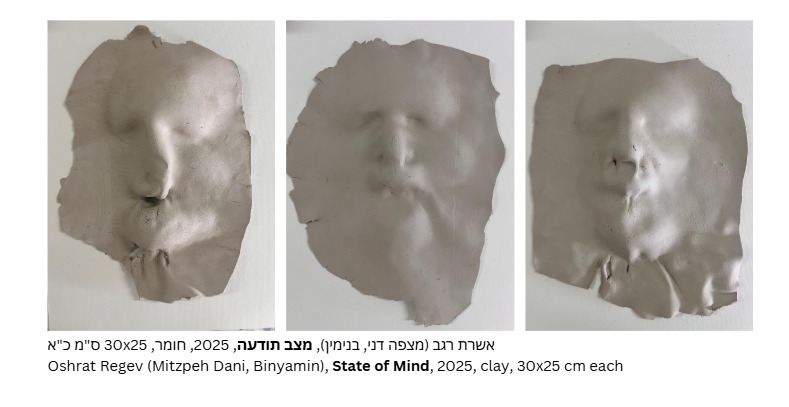
Oshrat’s second work, “State of Mind” (2025), began with a single face mask (“Silence,” 2023), a work dealing with human vulnerability. In preparation for the exhibition and amid the turbulent days of the war and the efforts to return the hostages, the work expanded into a series. On the eve of Simchat Torah 2025, during the final heartbeat of the Sabbath of the living hostages, the last masks were created.
The piece consists of a series of masks (five of which are presented in the exhibition). The masks were made by placing a thin layer of clay directly onto the artist’s face—covering the mouth and nose, restricting breathing, and capturing, imprinting a moment.
The masks preserve the traces of the face, the memory of the first touch, and the impression of moments of closeness, fear, exposure, and silence. The cracks, the incomplete lines, and the blurred boundaries testify to the tension between personal identity and collective identity—who we are and what the world imprints upon us from the outside.
Through the material—the earth that holds the shape of the face—a dialogue is created between the human being and the space in which they live: a dialogue about belonging, connection, impression, and fracture. The masks raise questions about memory, vulnerability, and the possibility of healing—not as a return to a wholeness that has been lost, but as a recognition of the fracture as part of a new identity built from it. From this recognition emerges a renewed understanding of the self and of the relationship between person, earth, and consciousness.
Together, the two works offer the viewer a moment of pause and breath—an invitation to observe the delicate lines between body and landscape, between fracture and strength, between the self and the earth from which it grows.
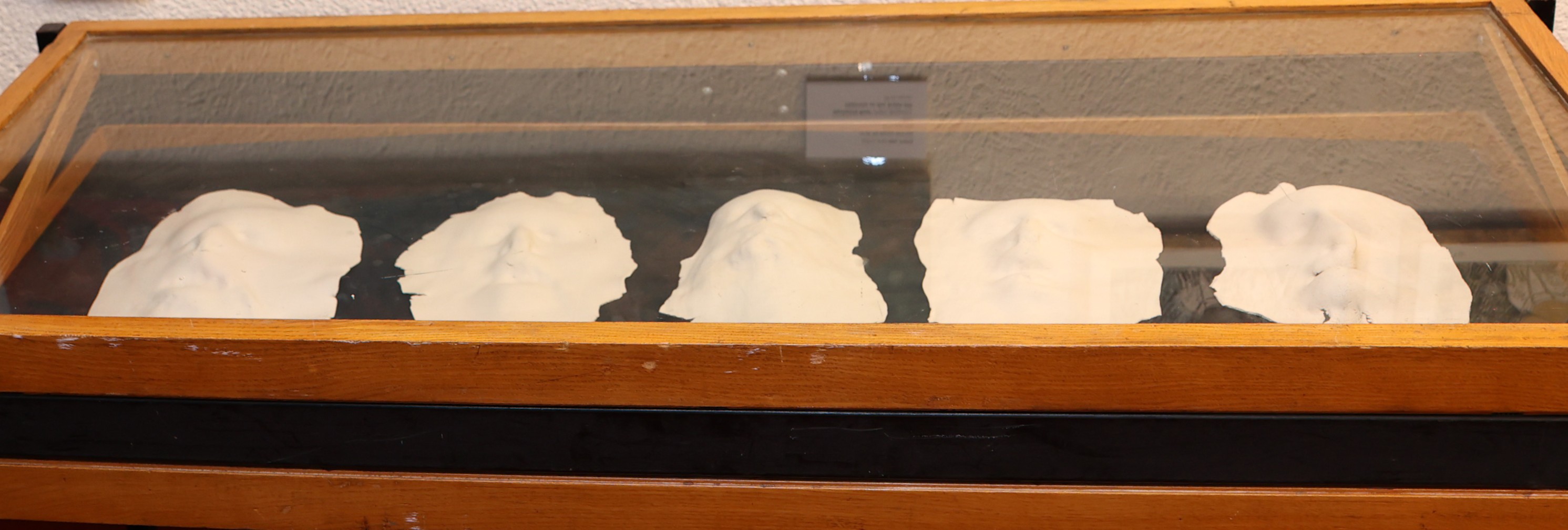
Oshrat Regev (Mitzpeh Dani, Binyamin), State of Mind, 2025, clay, 30x25 cm each
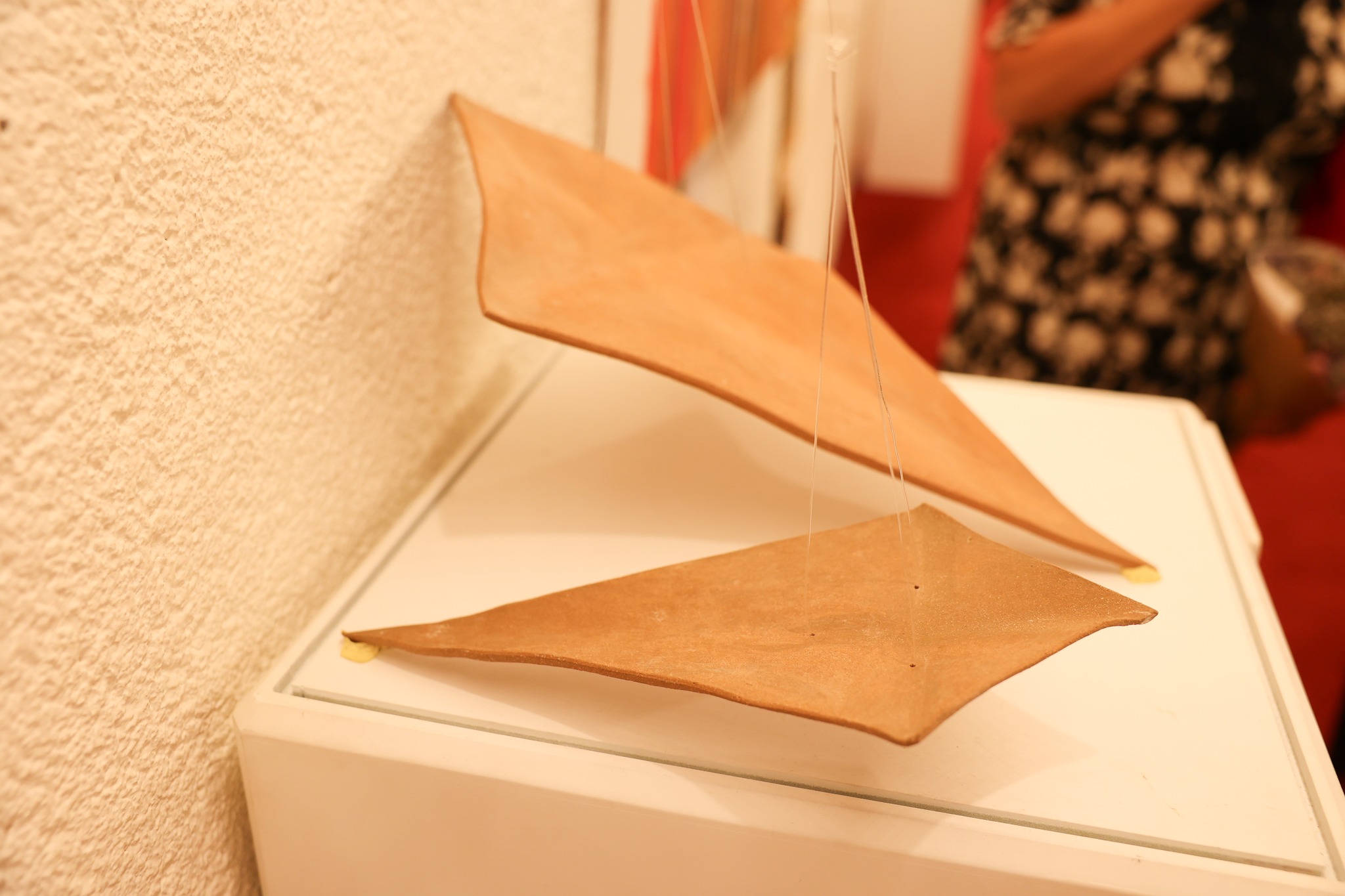
Oshrat Regev (Mizpeh Dani, Binyamin), Kites, 2005, clay and fishing wire, installation – various sizes