Spotlight from the Adama Exhibition: Lorraine Taari
Lorraine Taari is a Scottish-born artist who has made her home in Moshav Sde Nitzan. She came to volunteer in Israel at age 18, officially becoming an Olah Hadashah (new immigrant) when she was 24. Over the years Lorraine and her husband owned and worked a farm that produced flowers and pineapples and later served as an assistant to the cultural attaché in Zimbabwe. Lorraine found her artistic path in a studio in Kfar Aza and continued her studies at Sapir College. She went on to manage “The Gilda” an artists’ guild in the Eshkol region, strengthening the bond between artists and community. Today she focuses on ceramics as a tool for healing and reflection, alongside long walks in nature. She is a mother of three, and her work is deeply rooted in landscape, earth, and memory.
For this exhibition, Lorraine presents three emotionally charged works created across different periods of her artistic journey.
“New Dawn” (2022) is an oil painting of a forest floor in dark hues with a small bird in the corner. Painted before the events of October 7th, it is a work that lends itself to many interpretations and even Lorraine has changed the title over the years to reflect current events.
After October 7th, Lorraine found herself unable to create. While she devoted herself to running pottery workshops for others affected by the attack, her own artistic voice fell silent. It was only through the shared space of our artist meetings that she felt the blockage begin to loosen. Slowly, she returned to making art, channeling her grief and resilience into new works that are now part of this exhibition.
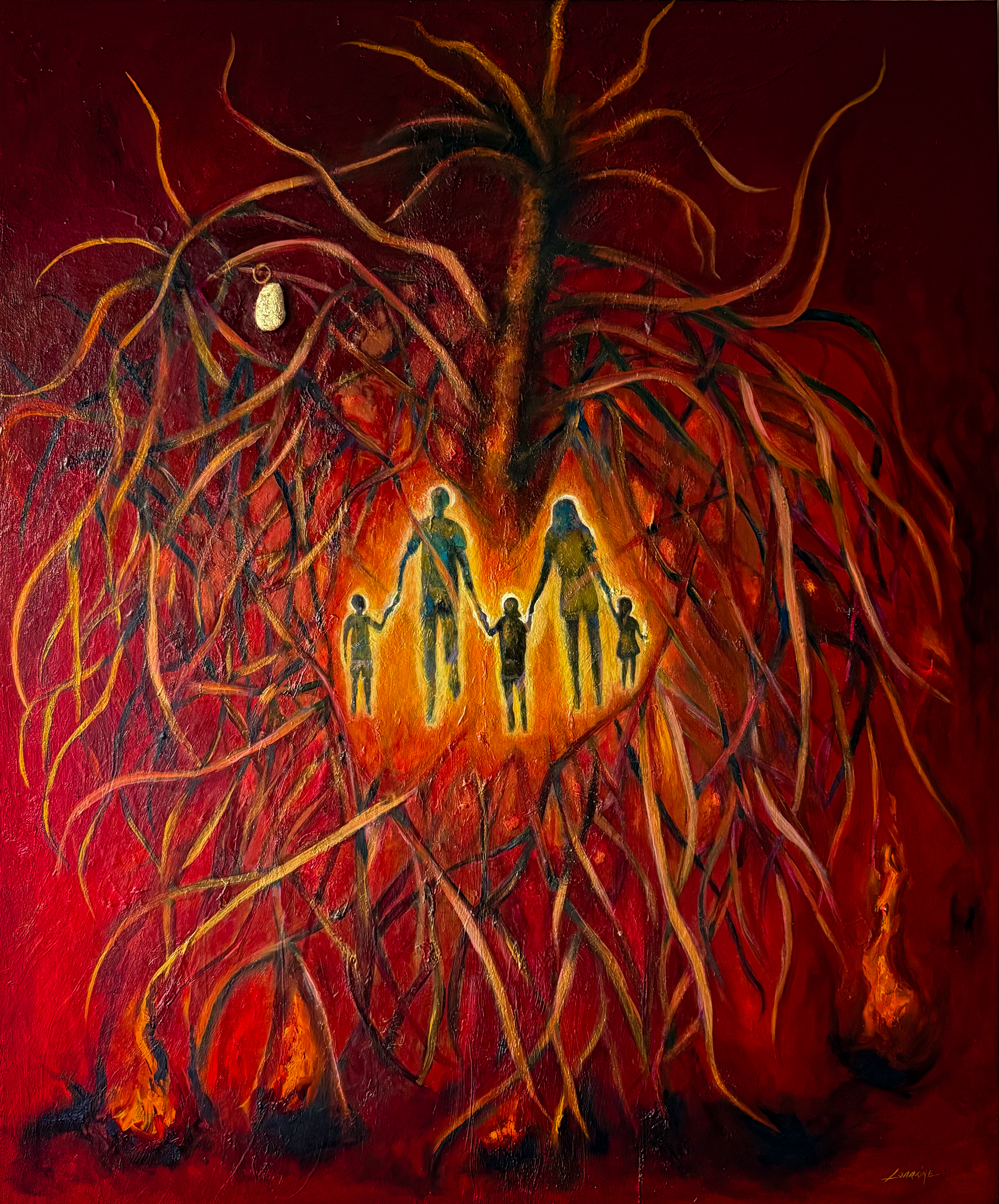
“Revival After Catastrophe” (2025) is one of these newly created pieces—an oil painting that evokes both a tumbleweed and the branching veins of a heart, with a family at its center against a vivid red background. Its form suggests wandering, destruction, uprooting, fragility, and at the same time the stubborn pulse of life.
“The Tears of Mother Earth” (2025) is a ceramic work in which the earth itself becomes a maternal figure. The piece depicts the hostages underground, but the soil around them is also the body of Mother Earth—mourning, holding, and bearing witness.
Each of the three works originally bore titles far more heartbreaking. Lorraine chose to change them once the living hostages were returned, shortly before the exhibition opened. This act—small, quiet, and full of meaning—reflects her enduring belief in renewal, dignity, and the sacredness of life.
Together, Lorraine’s works reveal an artist who listens deeply to the land, who turns pain into creation, and whose hands shape not just clay and paint, but also pathways toward healing.
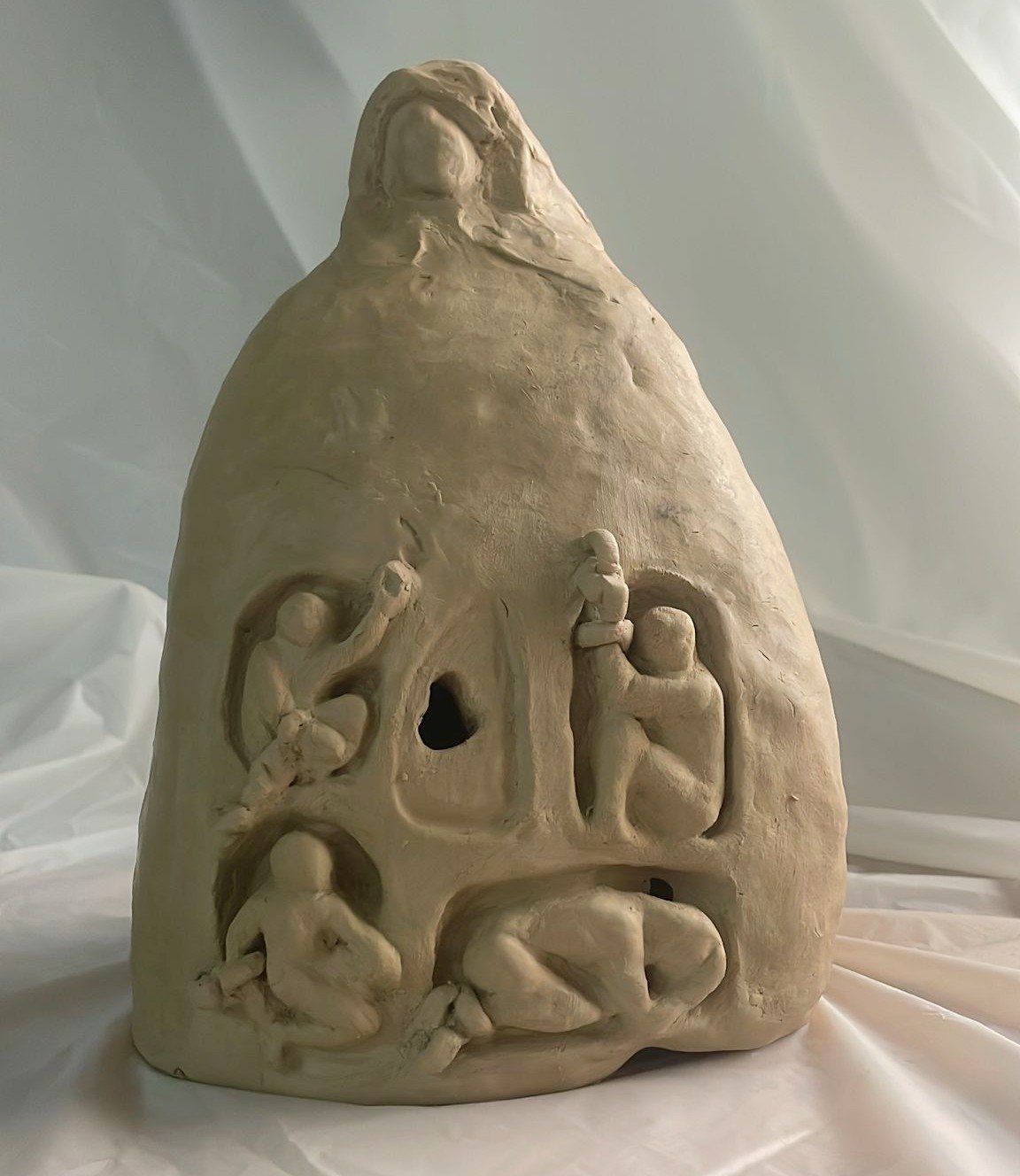
Lorraine Taari (Sde Nitzan), The Tears of Mother Earth, 2025, clay, 24.5x18 cm
.jpg)
Lorraine Taari (Sde Nitzan), New Dawn, 2022, oil on canvas, 67x117 cm
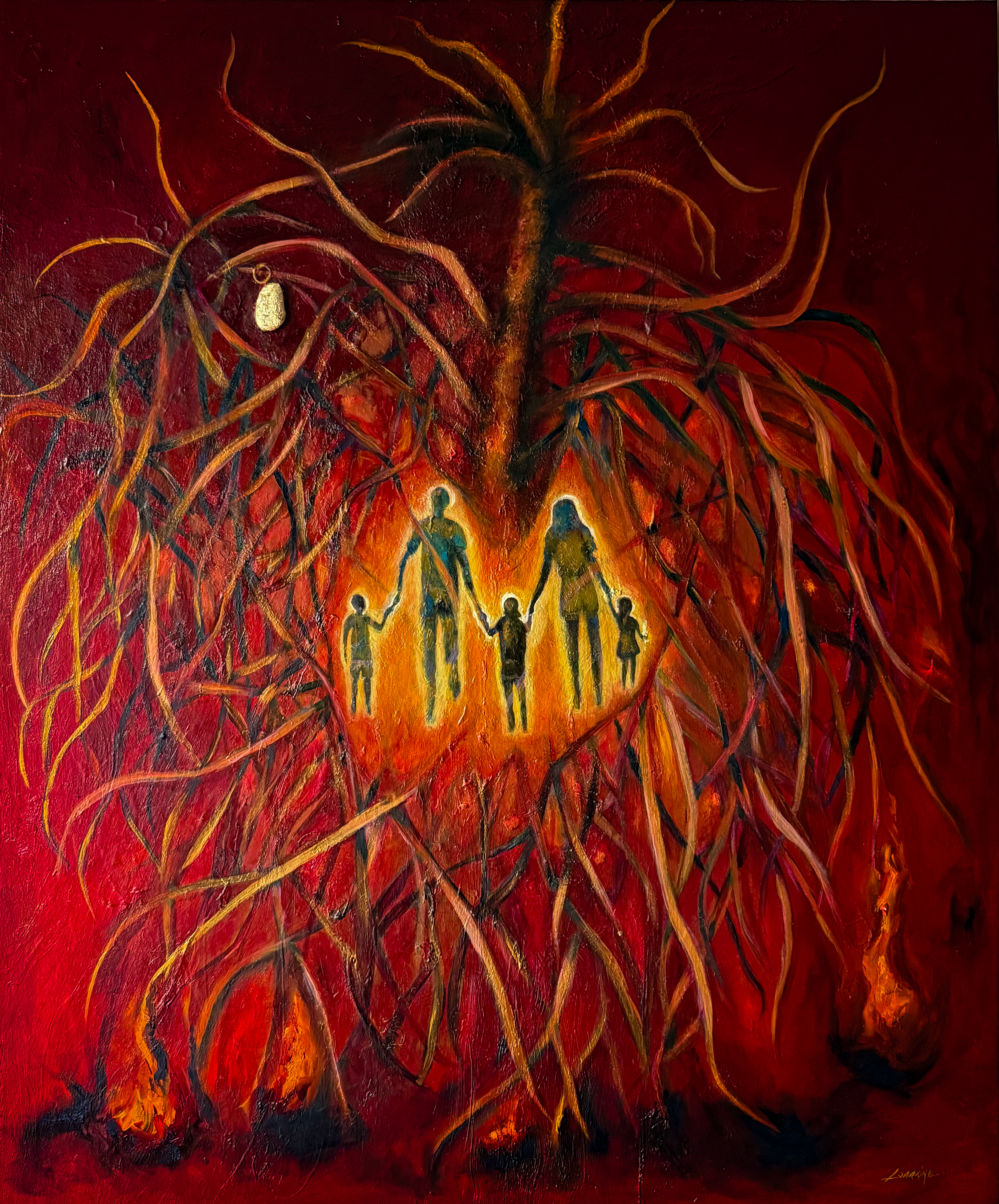
Lorraine Taari (Sde Nitzan), Revival After Catastrophe, 2025, oil on Canvas, 120x100 cm